


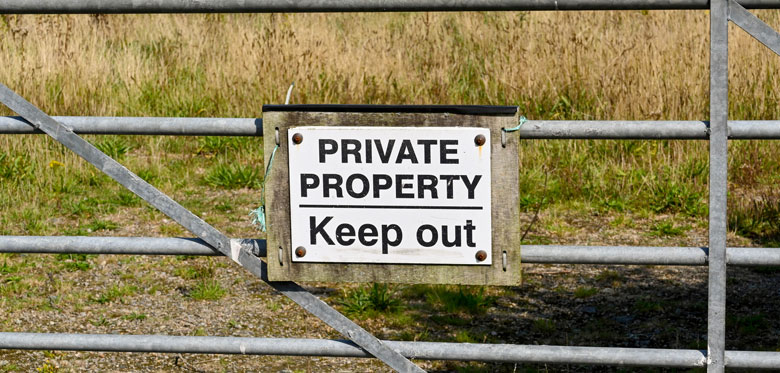
In England and Wales, access rights and property boundaries frequently create uncertainty and disputes between landowners and members of the public. One common area of contention revolves around a public right of way through private land.
If your land has a footpath, bridleway or byway passing through it, you must understand both your legal obligations as the landowner and the rights afforded to the public.
Defining a public right of way and its implications
A public right of way is a legally established route allowing members of the public to pass over privately owned land. These pathways can take various forms, such as footpaths, bridleways, restricted byways, and byways open to all traffic (BOAT). Each designation carries specific provisions regarding who can use the route and how it can lawfully be utilised.
Footpaths, for instance, allow only pedestrians, whereas bridleways also permit horse riders and cyclists. Restricted byways provide access for pedestrians, horse riders, cyclists and non-motorised vehicles, while BOATs allow all forms of traffic, including motorised vehicles, unless specifically restricted.
How public rights of way are established
Public rights of way through private properties commonly originate from historical usage, where paths have been openly used by the public over long periods, typically over 20 years without interruption. Alternatively, local councils may explicitly establish these rights through statutory processes under the Highways Act 1980. Once recognised, public rights of way are recorded on the definitive map maintained by local authorities. Landowners should obtain maps and relevant documents from their local council to confirm if such rights exist on their property.
It is vital for landowners to familiarise themselves with these established routes to preclude inadvertent breaches of public access rights, which may lead to legal proceedings or fines.
Responsibilities and obligations of landowners
As landowners, there are clear obligations when public rights of way pass through your property. Firstly, it is your duty to ensure that the pathway remains clear, safe, and accessible for its designated users. This includes maintaining gates, stiles, and bridges, ensuring no obstructions such as barbed wire, electric fencing, or locked gates limit access. Additionally, landowners must avoid placing signs intended to deter or discourage use of a recognised public right of way, as this could constitute a legal offence.
Although landowners have responsibilities to ensure route accessibility, the local council typically maintains the pathway surface and signposting. Clarifying these responsibilities with your local authority is advisable to prevent confusion and potential legal disputes.
Rights of the public using these routes
Members of the public are entitled by law to use these designated routes for legitimate purposes aligned with the path's classification. However, public users must respect the private landowner’s property by strictly adhering to the defined path.
Users have no legal rights to wander onto adjoining private land or to conduct activities outside the permitted uses. Additionally, users should act responsibly, refraining from causing damage, littering, or disturbing wildlife and livestock resident on the land.
If a pathway is unlawfully obstructed, inadequately maintained, or incorrectly indicated, members of the public may report this to their local council, which then has a statutory duty to investigate and resolve the issue.
Legal remedies and resolutions for disputes
Conflict can arise from misunderstandings, misinterpretation or overreach of public rights of way. In such cases, landowners and members of the public alike are strongly advised to seek early resolution by engaging in dialogue or mediation. Professional legal advice from a solicitor specialising in property law may be necessary to clarify rights and obligations and to negotiate an amicable solution.
In cases where informal resolution fails, legal proceedings through the court system may ultimately determine the issue. Both parties should treat litigation as a last resort, given the potential for cost and conflict.
Next steps
A clear understanding of your rights and obligations regarding public rights of way through private land is essential for all landowners. Maintaining open communication with your local authority, clearly delineating designated pathways, and upholding your responsibilities can minimise disputes and protect both your property and public rights. When complexities or disputes arise, seeking specialist legal guidance is pivotal to ensuring that your land management practices remain compliant with English and Welsh property law and public access rights. Contact us today on 0161 696 6178 to speak with our specialist solicitors.
Comments