

Every day, thousands of people across the UK carry out work at height. This can range from working on rooftops and scaffolding to working in warehouses at height. This week (18th-22nd May) is No Falls Week which is a campaign dedicated to promoting safe working at height in the UK. This is an ideal opportunity for employers to ensure they are providing safe workplaces to all employees.
The Work at Height Regulations 2005 define work at height as any work where, if precautions were not taken, a person could fall a distance liable to cause personal injury. With an estimated 2.7 million workers regularly working at height, there is a significant risk if safe practices are not followed.
Falls from height continue to be the leading cause of fatal injury to workers in the UK. Statistics produced by the Health and Safety Executive (HSE), confirm that 35 workers lost their lives due to falls from height in 2024/2025 and that 28% of all workplace deaths were due to falls from height during this time.
The Work at Height Regulation 2005 are aimed at preventing death and injury from falls. These regulations set out a legal hierarchy of control for work at height and there are many things employers can do to ensure compliance with these regulations and keep their workers safe whilst working at height.
So, what can employers do to promote safety when working at heights?
1. Eliminate working from height wherever possible
Employers can avoid height-based tasks as far as possible by allowing employees to work from the ground unless it is absolutely necessary for them to work at height. Extendable tools can assist with this, or assembly work can be done at ground level before being lifted into place using a crane.
2. Training
Training is an effective way to improve workplace safety. Training should be delivered to all employees and be regularly updated and reviewed to address any risks within the workplace.
The training provided should be tailored to the specific risks presented when working at height and should address all relevant safety measures. Employers may also consider offering additional courses and workshops relating to the risks and safety measures.
3. Risk assessments
It is important that all employers evaluate all risks involved when working at height to ensure compliance with health and safety regulations. Employers should take all reasonable steps to eliminate risks where possible.
Where risks cannot be eliminated, employers can manage risk through an effective risk assessment. These would look to highlight the hazards present and the control measures that should be put in place to reduce or eliminate these risks. These assessments should be reviewed regularly to ensure the measures in place remain effective.
4. Provide correct and appropriate Personal Protective Equipment
Employers need to provide those who work at height with well-maintained protective equipment such as hard hats and harnesses/lanyards to protect them if they were to fall from height. They should also provide equipment to make work at height safer, such as safe scaffolding and mobile elevating work platforms (MEWPs) with guardrails and toe boards in place to prevent falls. Safety nets can also be of use as a back-up option if falls do occur.
5. Safe systems of work
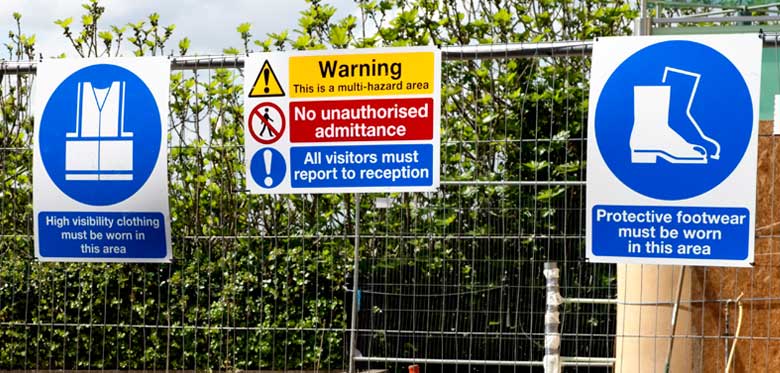
Employers can and should implement safe working practices and procedures, such as prohibiting walking on fragile surfaces at height, displaying warning signs in unsafe areas, using boarding on such areas, and restricting or stopping work from height during adverse weather conditions. The safe system of work should also include plans for emergency and rescue procedures after a fall. All work at height should be adequately supervised to ensure it is being done safely and correctly.
Ensuring safety when working at height is essential. Through effective training, risk assessments, PPE and ongoing awareness, employers can reduce the risk of injury and create a safer workplace for their employees.
If you or someone you know has had a fall at work resulting in a personal injury and you require some advice or help, then our personal injury team would be happy to assist you. Contact us today on 0161 696 6235 or fill in our online enquiry form.
Blog author: Mahrukh Bashir
Comments