

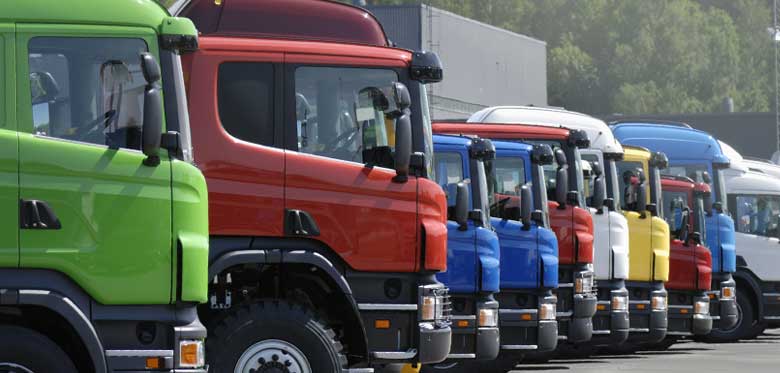
In October 2024 Transport for London (TfL) introduced stricter safety requirements for Heavy Goods Vehicles (HGVs) operating in the capital as part of the city’s Vision Zero strategy to eliminate deaths and serious injuries on London’s roads.
Understanding the Direct Vision Standard (DVS)
The DVS assesses how much a driver can see directly through their cab windows, without relying on mirrors or cameras. Vehicles are rated from 0 stars (limited visibility) to 5 stars (excellent visibility). The aim is to reduce blind spots and improve safety for vulnerable road users such as pedestrians and cyclists.
From 28 October 2024, the minimum DVS rating required to operate in London increased from 1 star to 3 stars. Vehicles rated 0 to 2 stars must be fitted with a Progressive Safe System (PSS) to qualify for a safety permit.
The Progressive Safe System includes:
- Camera monitoring systems to cover blind spots
- Class V and VI mirrors for enhanced visibility
- Blind spot information systems to detect nearby road users
- Audible warnings for turning manoeuvres
- Clear signage to alert others to the vehicle’s presence
Why it matters
HGVs have historically been involved in a disproportionate number of fatal collisions in London. These new standards are designed to address that risk head-on.
One of the biggest safety challenges with HGVs is the driver’s limited field of vision. Traditional cab designs often leave large blind spots, especially on the passenger side and directly in front of the vehicle. These blind spots can obscure pedestrians and cyclists, particularly in busy urban environments.
The updated Direct Vision Standard (DVS) and Progressive Safe System (PSS) directly address this issue by:
- Improving visibility through mirrors and cameras
- Alerting drivers to nearby road users with sensors and audible warnings
- Encouraging safer driving behaviour in high-risk areas
For operators, non-compliance could result in penalties of up to £550 per breach, not to mention reputational and legal risks.
Comments