


Permissive right of way is a common yet often misunderstood aspect of property law in England and Wales. As property ownership and land access issues continue to evolve, understanding permissive rights of way becomes increasingly important for both landowners and members of the public.
In practical terms, a permissive right of way refers to a situation in which a landowner grants permission to others for access across their property without legally establishing a permanent public right.
What distinguishes a permissive right of way from a public right of way?
Unlike a designated public right of way, that is formalised through legal processes and recorded on official maps, a permissive right of way is granted informally by the landowner. These rights typically arise through verbal or written consent and can be withdrawn or altered at any time at the discretion of the landowner.
Therefore, it is crucially important for both landowners and users to recognise that using a permissive right of way does not automatically confer permanent rights or legal protection.
Key implications of permissive rights of way for landowners
From a landowner's perspective, offering a permissive right of way can benefit local communities by providing temporary access for recreational, practical, or environmental purposes. However, there are specific considerations which must be carefully managed.
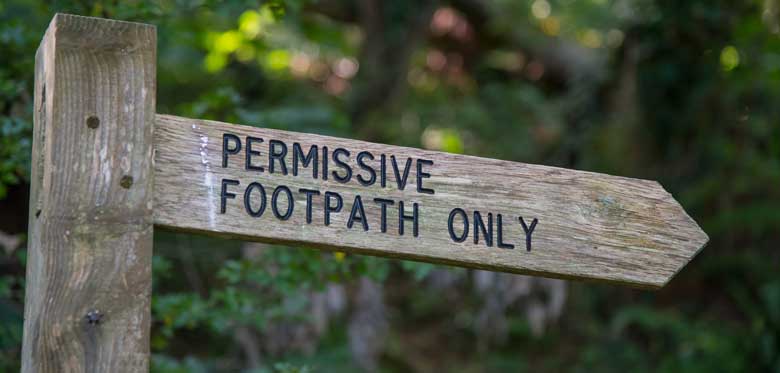
Landowners must clearly communicate that the right of access provided is permissive. This can be achieved through appropriate signage or by written agreements, thus preventing misunderstandings that may lead to inadvertent establishment of statutory public rights over time.
Landowners should regularly review the status of any permissive rights of way, documenting access arrangements clearly and consistently. If circumstances change, such as land use modifications or intended development, landowners retain full discretion to terminate or modify these permissive agreements, provided reasonable notice is given where appropriate.
Advice for individuals using permissive rights of way
For users, understanding the temporary and informal nature of permissive rights of way is essential. Permission-based access can be removed at any time, and users should respect landowner decisions and any established conditions of use.
Becoming overly reliant on a permissive right of way without remaining mindful of its temporary nature could lead to difficulties, particularly if the permissive access is revoked or altered.
Always look for appropriate signage indicating permissive rights. If unclear, users should take proactive measures to seek clarification from landowners to avoid disputes or potential trespassing claims.
Legal considerations and seeking professional advice
Due to the informal nature and potential complexities connected with permissive rights of way, it may be beneficial to seek professional legal guidance. A solicitor well-versed in property law can provide clarity and support, assisting landowners in establishing appropriate agreements and signage, and helping users understand their rights and obligations clearly. Contact us today on 0161 696 6178 to speak to our specialist solicitors.
Permissive rights of way are valuable tools in maintaining public access whilst preserving flexibility for property owners. However, due to their inherently informal nature, clear and open communication, alongside legal diligence, remains essential in ensuring they fulfil their intended purpose effectively.
Comments