


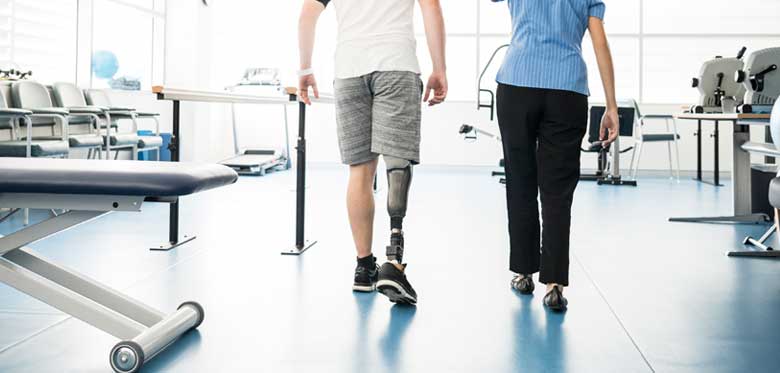
After the amputation of a limb there are undoubtedly many challenges to overcome. Recovery time will be needed following surgery, and it will take time to adjust to the significant change to your body.
It is possible to feel pain in your limb or digit even after it has been amputated. This is known as phantom limb syndrome, sensation, or pain. It can affect any area of the body, such as a hand, arm, leg, toes or feet. Approximately 50-80% of amputees will experience phantom limb pain to some degree.
Why does it happen?
The cause of phantom limb pain has been the subject of many theories over time. The important thing to note is that it is not called ‘phantom’ pain because it is thought to be imaginary; it is very much a real issue experienced by many amputees. It is understood to be a result of signals originating from the brain and spinal cords to the nerve endings in the residual limb. In simple terms, it is believed that the brain still expects the amputated limb to be present and sends signals to it, which can cause pain when the brain doesn’t receive a response from the amputated limb.
The severity of the pain will vary from person to person and can be shooting, stabbing, itching, burning, or electric shock like, but will usually improve over time. The psychological impact of an amputation, including PTSD from the initial incident, stress caused by the life changes that follow amputation and anxiety about the future, can all compound and intensify phantom limb pain, meaning that various treatment approaches may need to be taken.
In some amputees, phantom limb pain is manageable and they can learn to live with it. However, for others it can be debilitating without treatment as it can disrupt sleep and significantly affect quality of life.
Can it be treated?
It is recognised that the various treatment options for phantom limb pain will work for some people, but not for others, so it is sometimes necessary to try different options until you find one that works for you. There are a number of recommended treatments to help manage phantom limb pain and it is likely that both medical and non-medical options will be explored, such as:
- Medication, which could include anticonvulsants, anti-inflammatories, opioids, antidepressants, or muscle relaxants and should be managed carefully to avoid over-reliance or long-term dependency.
- Acupuncture to stimulate the area in question and reduce pain.
- Massage or repositioning of the residual limb to improve circulation and muscle stimulation.
- TENS machine to interrupt pain signals delivered to the residual limb.
- Application of heat or cold to the residual limb.
- Mirror box therapy, which involves using mirrors to make it appear that you are still controlling the amputated limb, sending signals to the brain that it is functional.
- Virtual reality therapy, which is a more advanced version of the above using computer technology, including a VR headset showing the missing limb moving normally.
- Mental exercises, including imagining using or stretching the amputated limb or digit to reduce pain.
- Mindfulness exercises to calm the nervous system.
- Cognitive Behavioural Therapy to reframe negative thought processes about the amputation and residual limb.
- Advanced prosthetics which provide sensory feedback to the brain.
- Further surgery may also be considered as a last resort, but this is rare.
- Sharing experiences with other amputees also suffering from phantom limb pain can be beneficial in identifying coping techniques, as well as feeling less alone.
Often, a combination of the above is needed to help improve an individual’s phantom limb pain, dependent on their overall presentation and any other difficulties they are experiencing.
It is important to remember that phantom limb pain is common after an amputation and there are steps that can be taken to help manage the condition. If you are experiencing any such pain, speak to a medical professional for guidance and support, as it is possible to manage the pain effectively with the right support and techniques.
At Stephensons our amputation claim experts have a great deal of experience in helping those who have undergone amputation, as a result of an injury that wasn't their fault, to recover compensation. This compensation can also help you to access the help and support you may need to enable you to continue to live a happy and fulfilled life. Call our team now on 0161 696 6235.
Comments